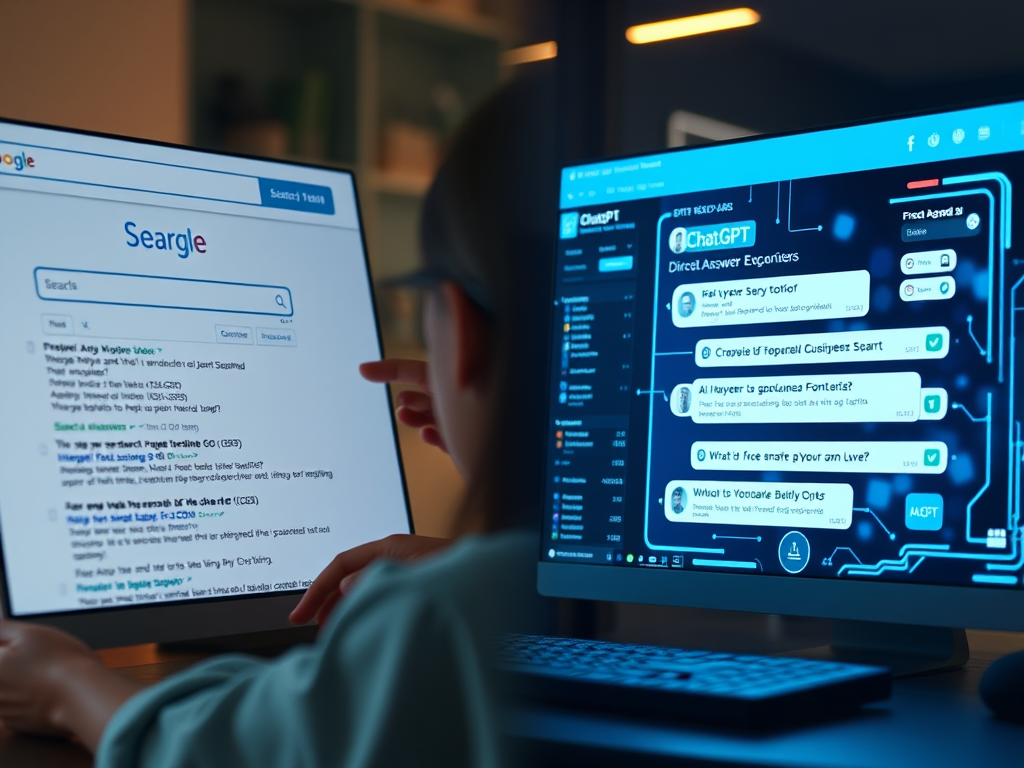
Remember how we used to search online?
You’d type a phrase into Google, –“best running shoes for flat feet” – and in a split second, Google would return a neat list of blue links. You’d scroll through titles and meta descriptions, maybe open 3–4 tabs, skim a few articles, and choose the most suitable result. That was classic SEO in action: optimize for the keyword, get ranked, earn the click.
Fast forward to today, and the experience looks very different.
Now, you might just ask ChatGPT, “Which are the best running shoes for someone with flat feet who runs 5km daily?” And you’ll get a direct, conversational answer – often with a ranked list, product descriptions, and even reasoning behind the picks. No links. No clicking. No tab-hopping.
Just one straight-up answer.
Welcome to the world of AI Engine Optimization/ Answer Engine Optimization (AEO) – where the goal isn’t to get on page one, but to become the answer AI chooses to share.
In this blog, we’ll break down what AEO is, why it matters for marketers, and how you can start optimizing your content for the age of AI-generated answers.
From Search Engine to Answer Engine
Traditional search engines like Google and Bing indexed web pages and presented ranked results. When I started my marketing career, page one on Google was the holy grail.
But now, the zero-click answer is the real MVP. These AI assistants or “Answer Engines” like ChatGPT, Google Gemini, Microsoft Copilot, Perplexity AI, Claude don’t show 10 responses, but present one specific solution. Your goal? Be that answer.
How to optimize content for AI
If you ask chatGPT: “Best CRM tools for small businesses?”, odds are HubSpot will show up. Why?
- Easy-to-read comparison pages
- In-depth, high-authority blogs
- Actual use cases + customer testimonials
- FAQs on every product page
- Schema markup for reviews
Now let’s look at some best practices in AEO inspired by this brilliant post:
Be Structured, Not Stylish
AI likes clean, snackable formats. That means: Headers with clear intent, bullet points for quick takeaways, FAQs with direct answers and “What is…” sections with tight definitions. The more scannable your content is, the better AI understands it. (Use Schema Markup, FAQs, lists and tables.)
Be Helpful
Be predictable. Be easier to parse. Use consistent patterns. For example, you could start with a TL;DR summary, follow with “how it works” or “why it matters” and end with actionable tips.
Build Trust
Expertise, Authoritativeness, and Trustworthiness still matter. For instance, you could enrich your content with real author names, author bios (with credentials) and external citations and data points.
Be Clear, Not just Clever
AI doesn’t love metaphors as much as humans do. Use simple, clear explanations. Think “explain like I’m five” but with industry-level credibility.
What Content Format Works for AEO
While AEO is a still evolving framework, my research thus far has pointed out that creating these types of content will help you get more ‘popular’ with AI models:
- “What is…” definitions (keyword-rich, 1-2 line summaries)
- Pros/cons tables (AI loves comparison and clarity)
- Step-by-step guides (Easy for AI to work into instructions)
- FAQs (especially if using FAQ Page schema)
- Case studies (Helpful to highlight outcomes in bullet points)
Tools to Help You Optimize for AEO
Here’s a mix of AI-first and SEO-first tools to help you design your content strategy for AI visibility:
| Tool | What It Does |
| ChatGPT / Claude | Simulate how AI would summarize your content |
| Perplexity AI | See what sources it’s quoting for your topics |
| SEMrush Topic Research | Find clusters of related questions |
| AlsoAsked / People Also Ask | Understand follow-up queries and user intent |
| Surfer SEO | Get content optimization ideas |
| Schema Generator | Add FAQ or article schema easily |
How to Add AEO to Your Content Workflow
If you’re a content or marketing lead, here’s how to start with your AEO optimization. You don’t need to reinvent your blog from scratch — just rethink how it’s structured.

Is SEO dead then?
Not even close.
Despite what the headlines might scream, SEO isn’t dead, it’s just growing up.
The way we optimize content has evolved. We’re no longer writing for keywords or monitoring competitors or building backlinks. Instead, we’re focusing on intent. We’re answering real questions.
AEO (AI Engine Optimization) doesn’t replace SEO – it builds on its foundation. The core principles still matter, but now we focus on whether your content can serve both the human asking the question and the AI deciding how to answer it. So bring your brand voice, storytelling and unique perspective.
Write for humans AND ensure AI understands you’re an expert at resolving ‘human’ queries.
Future-Proofing Your Marketing Strategy
The marketing playbook is changing fast. Just like we learned to optimize for Google back in the day, we now have to understand how AI assistants think. AEO isn’t just for early adopters anymore — it’s for anyone who wants to show up where the real action is happening: in the AI-generated answer.
Leave a Reply